Sleep, comfort and the details that matter
Choosing Between Vispring Mattress Models: A Practical Comparison Checklist
A mattress name can suggest a particular level of luxury. It cannot tell you whether the bed will feel comfortable at 2 a.m. Comparing Vispring mattresses is easier when you look past model names and evaluate the details that shape everyday sleep: construction, firmness, support, materials, base compatibility and care.
Published November 2, 2026
Vispring models such as the Regal Superb, Baronet Superb and Cashmere Superb may appear close together in a retailer’s catalogue, yet the right choice is not necessarily the one with the most elaborate-sounding name or the longest specification sheet. It is the mattress that feels supportive in your usual sleep positions, suits the people sharing it, works with the bed base you own and fits your practical expectations.
That sounds straightforward. In a showroom, it can be anything but. A short trial on a display bed gives only a partial impression; two mattresses may feel surprisingly different even when their descriptions seem similar, while a small change in upholstery, spring configuration or firmness can alter the experience. The answer is not to guess from a model name. It is to compare the same factors, in the same order, and ask the retailer to clarify anything that is not documented.
This guide offers a practical checklist for evaluating Vispring mattresses, including the Regal Superb, Baronet Superb and Cashmere Superb. It does not assume that a particular model is best for every sleeper, or that product specifications remain unchanged. Ranges, available tensions, materials and construction details can vary by market and over time. Verify current information with the manufacturer or an authorized retailer before deciding.
Begin with your own sleep, not the catalogue
Before comparing mattress specifications, describe what you want a mattress to do. “Comfortable” is too broad to guide a useful choice. Think instead about where you feel pressure, whether you tend to wake warm, how often you change position and whether your current mattress feels too firm, too soft or simply uneven.
Your sleep position can offer a starting point, not a verdict. Side sleepers often notice pressure around the shoulder and hip, while back sleepers may pay closer attention to whether the lower back feels supported without being pushed upward. Stomach sleepers may be especially sensitive to excessive sinkage around the midsection. People who move between positions need a surface that remains comfortable as they turn. These are useful observations to bring to a fitting, not rules that can determine the answer without trying the mattress.
Also consider your ordinary sleeping conditions. Do you sleep alone or share the bed? Does one person wake more easily when the other moves? Do you use a thick topper or mattress protector? Is the bedroom cool, warm or variable through the seasons? Answers to those questions help explain what you value in a bed—and prevent a comparison from getting sidetracked by details that have little bearing on your comfort.
A comparison checklist for Vispring mattresses
Use one checklist for each model you consider. Record the information rather than relying on memory: showroom impressions blur, and brand or model names are easy to confuse after several trials.
- Construction: What are the mattress layers and materials? How is the support system arranged? Which specifications are confirmed for the exact size and version offered?
- Feel and tension: What firmness options are available? Can the two sides be specified differently? Does the retailer use consistent language to explain the choices?
- Support in your sleep positions: Do your shoulders, hips and back feel comfortably supported when you lie as you normally do?
- Movement and sharing: How does the mattress feel when a partner gets in or turns? Can you test this together?
- Size and height: Does the mattress fit your frame, sheets and room? Is the finished bed height practical?
- Base compatibility: Is your existing bed base suitable for the exact mattress? Are there requirements for slats, spacing or a particular type of foundation?
- Care: Does the mattress need rotating or turning? What are the manufacturer’s instructions and warranty conditions?
- Ownership details: What is included in the delivered price, and what are the delivery, installation, trial, return and warranty terms?
The checklist helps make a meaningful comparison possible even when product pages use different terminology. It also gives you a natural way to identify gaps. If one model’s description specifies a material but another does not, ask whether the difference reflects a genuine design change or simply incomplete product information.
Construction: ask what the specification actually means
A mattress is a layered system. Its support core, comfort layers, upholstery and covering all contribute to the feel, and the effect of one component depends on how it works with the others. For that reason, a list of materials alone is not a reliable ranking of comfort. Knowing what a mattress contains may help you understand its design, but it does not establish how your body will respond to it.
When comparing the Regal Superb, Baronet Superb and Cashmere Superb, request the current construction details for the particular model and size you are considering. Ask the retailer to explain the practical significance of each difference. If two specifications refer to spring types, counts or layers, find out what those terms mean in the finished mattress—and whether the information applies to the exact configuration on the floor.
Be cautious about treating any one feature as a shortcut to quality. A higher spring count, a more expensive-sounding natural fibre or a longer list of layers does not automatically translate into better support for a particular person. Nor does a material’s reputation tell you how a complete mattress will feel after it is combined with other components. Construction is most useful as an explanation for a mattress’s characteristics, not as a substitute for trying it.
Ask whether a quoted specification is a standard feature, an option, or a detail that changes by size or market. That distinction matters. A retailer may be showing a configuration that differs from the version you will receive, or using a model description that does not cover every available choice. Clear answers make it easier to compare like with like.
Firmness is a personal experience, not a universal scale
Mattress firmness labels are useful only when you know what they describe. “Medium” in one range may not feel like “medium” in another. Body shape, weight distribution, sleep position and the sensation of the upper comfort layers all affect how a mattress feels to an individual. One sleeper may describe the same surface as gently yielding; another may find it too soft.
Ask which firmness or tension options are currently available for each Vispring model. Then ask the salesperson to explain how the options differ in practice. If the language is technical, request a plain-language comparison: which option offers more resistance, which allows more surface give, and how the choice affects the feeling of support? Do not assume a firmness option exists for every model, size or market without confirmation.
When you test a mattress, take time to settle in. Lie on your side, back and stomach if those are positions you commonly use. Notice whether you can relax your muscles, whether pressure builds at the shoulder or hip, and whether you feel balanced rather than perched on top of the mattress or sinking farther than you want. Changing positions should feel natural. A brief sit on the edge, while useful for assessing access, is not a test of sleeping comfort.
There is no prize for choosing the firmest option or the softest one. The target is a surface that feels comfortable and supportive for your body and your habits. If your current mattress has trained you to expect a particular feel, give yourself time to compare alternatives without assuming the familiar one is the only suitable one.
How to test the Regal Superb, Baronet Superb and Cashmere Superb
Approach the three named models as candidates to assess, not as steps on a ladder with an obvious winner at the top. Model names do not tell you enough about the differences to predict which one will suit you. Product versions, options and specifications can change; the retailer should confirm the current details rather than relying on a general impression or an outdated description.
First, ask for the specification of each exact mattress you are about to try. Write down its available firmness, construction details, size and any relevant base requirements. Next, ask whether the showroom examples represent the same size and configuration you would order. If they do not, learn what differs and how that could affect the comparison.
Then test each mattress in a consistent way. Spend several minutes in your usual position, and repeat the same movements on each one. If you share a bed, both people should try the mattress. Discuss comfort separately before comparing notes: one partner’s strong preference can otherwise shape the other’s first impression. Ask each sleeper to identify specific sensations—pressure, ease of turning, temperature or a feeling of inadequate support—instead of simply voting for a favourite.
If the models feel close, do not force a distinction. Revisit your notes and identify what truly varies: perhaps one available tension feels more appropriate, a construction detail matters to you, or the terms of ownership differ. If there is no meaningful comfort difference, practical factors such as price, delivery, care instructions and base compatibility may help resolve the decision. Those factors should be verified in writing, too.
Test the bed with the setup you will actually use
A mattress does not operate in isolation. The bed base, mattress protector, sheets and any topper can affect how the complete sleep surface feels. This is one reason a showroom trial may not perfectly predict the experience at home. It is also why a mattress should be considered as part of the entire bed rather than as a product name on a label.
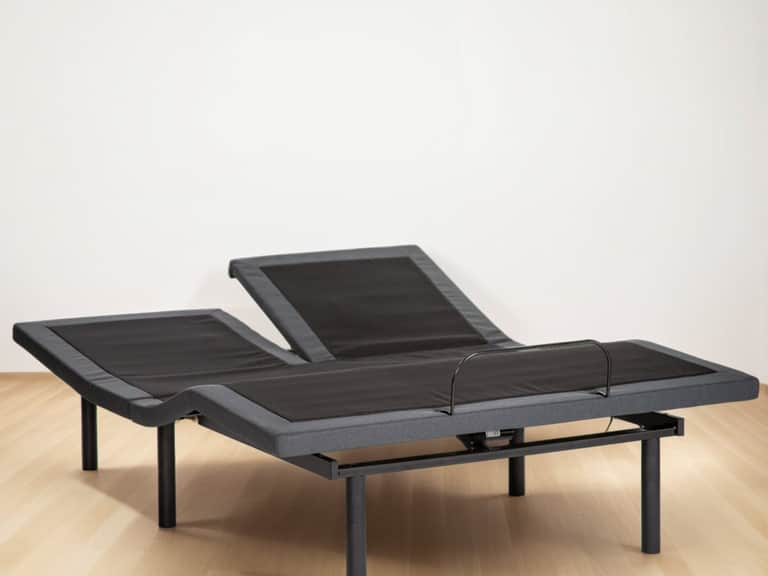
Before buying, check that your existing frame and base are compatible with the specific mattress. Ask about the required support surface and any limits on slat spacing or base type. If you are considering an adjustable base, confirm compatibility directly; do not assume that a mattress designed for one foundation will work equally well on another. Record the answer, particularly if you are ordering online or coordinating delivery with a separate bed purchase.
Check the dimensions against your frame and fitted sheets, not just against a general bed-size label. Mattress sizes and terminology can vary across countries and manufacturers. Height matters as well: the combined height of the base, mattress, protector and bedding changes how easy it is to get in and out of bed. For some households, that detail is an everyday comfort issue rather than an aesthetic one.
Finally, think about the bedroom itself. A mattress that barely fits through a doorway, stairwell or turn in a hallway can create a delivery problem. Ask the retailer about access measurements, packaging and installation before the delivery date. A careful comparison includes the journey into the home, not just the moment of lying down in the showroom.
Care, durability and the fine print
Before placing an order, request the current care instructions for the exact mattress. Some mattresses are intended to be rotated; others may have different requirements. Do not assume that every design should be flipped, or that a retailer’s general advice applies to all models. Follow the manufacturer’s instructions, since inappropriate handling could damage the mattress or affect warranty coverage.
Ask what the warranty covers, how long it lasts and what conditions apply. Clarify how the mattress should be supported, what counts as normal wear and how a claim would be assessed. Warranty length is not a direct measurement of comfort or an assurance that every change in feel will be covered. It is a set of terms that deserves a careful read before purchase.
Similarly, establish the retailer’s policies on delivery, installation, old-mattress removal, comfort trials, exchanges and returns. If a trial period is offered, ask whether it applies to the exact model, what condition the mattress must be in, and whether fees or restrictions apply. Keep the written terms and order confirmation. These details are easy to overlook in a showroom but matter if the mattress does not work as expected at home.
Common comparison mistakes to avoid
- Choosing by model name alone. Names provide identification, not a reliable forecast of personal comfort.
- Assuming a price difference proves a comfort difference. Price may reflect design, materials or other factors, but only a consistent test can help assess how a mattress feels to you.
- Relying on a single firmness label. Labels are not always comparable across models or brands.
- Testing for only a minute or two. A quick impression may miss pressure, movement and position changes.
- Taking a product page as the final authority. Specifications and options can vary. Confirm current details for the exact model and configuration.
- Forgetting the base and bedding. Compatibility and accessories can influence both the feel and the practical fit of the finished bed.
- Skipping the written terms. Delivery, care, warranty and return policies are part of the buying decision.
A final decision framework
When the comparison is complete, narrow the choice using three questions. First: which mattress feels most comfortable and supportive in the positions you actually sleep in? Second: does that model work with your partner’s needs, your bed base and your bedroom? Third: are you satisfied with the current specification, care guidance, price and purchase terms?
If one model answers those questions clearly, you have a reasoned choice. If two remain close, revisit the areas where they differ and ask for documentation rather than relying on an assumption. If none feels right, pause. A premium name is not a reason to accept pressure, instability or discomfort that you noticed during the trial.
The Regal Superb, Baronet Superb and Cashmere Superb can be compared methodically without pretending that a single specification—or a model name—will settle the question for everyone. Test carefully, verify current manufacturer information and keep the focus on your own experience. The best mattress is not the one with the most impressive description. It is the one that delivers a comfortable, well-supported night in the bed you will use every day.
Before you buy: quick checklist
- Confirm the current specification and available firmness for each model.
- Try each mattress in your normal sleep positions, ideally with your bed partner.
- Check mattress size, height and compatibility with your base and frame.
- Ask for the manufacturer’s care instructions and warranty terms.
- Review delivery, installation, trial, exchange and return policies in writing.